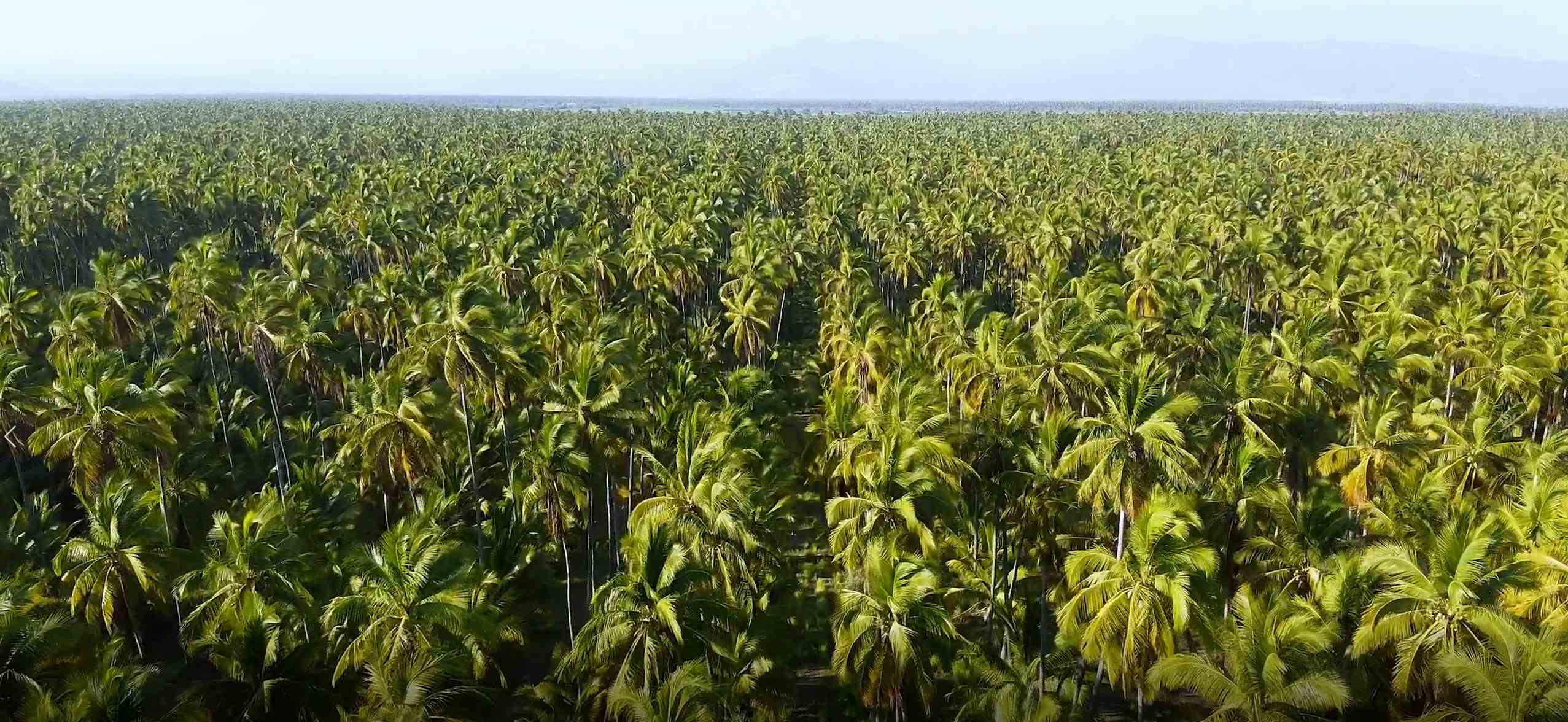
Aerial view of a vast, vibrant coconut plantation stretching to the horizon.
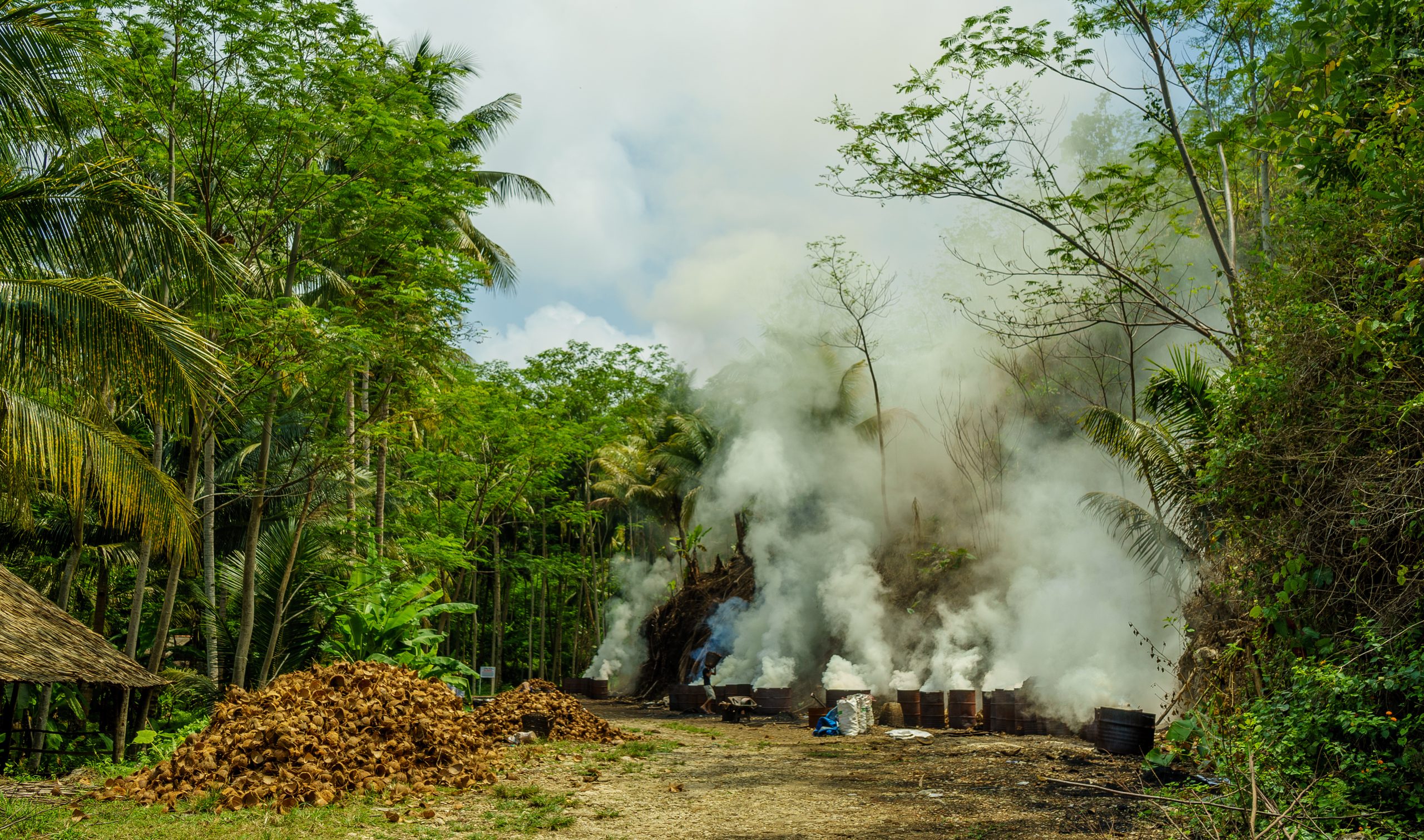
Coconut husks burning in a clearing inside a Philippine plantation.

He is burning your next house.

He is making a rational decision.

Section 2 — The Gap

Over the last decade, impact-aligned capital has deployed roughly $2.5 trillion1 against shelter, energy, carbon, and the futures of a generation of children. The capital is abundant. The problems remain. The failure mode is not the amount; it is the sorting. Carbon dollars buy carbon, housing dollars buy housing, and a thriving community is a system, not a sum. No silo can buy what the outputs make possible when they arrive together.

The dollars were always there. The mechanism was missing.

The full diagnosis, including why the carbon credit is the clearest case, is section 4 of the technical briefing.

  1. 1. Approximate ten-year aggregate of global impact-investing AUM and private-foundation outflows directed at sustainable-development, climate, and human-development mandates. Compiled from GIIN annual market sizing, OECD DAC private philanthropy data, and Giving USA.

Section 3 — The System

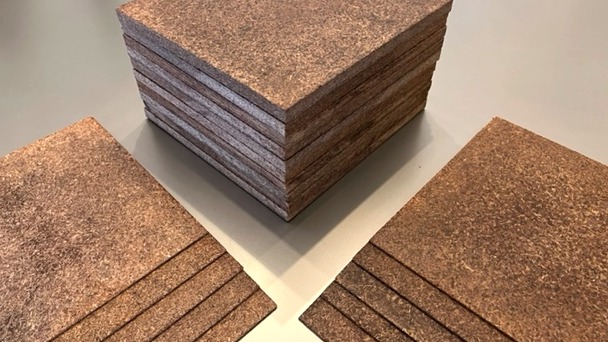
The key is a system, not a machine: waste becomes structural material, the material frames housing, the housing carries energy, and the proceeds rebuild the plantation and capitalize the next turn. Its engine is the Coconut Processing Unit, a constellation of shipping containers deployed into the plantation itself, with no grid and no roads: heat and pressure activate the lignin already in the fiber, and the unit powers itself from the biomass it processes. Two things are absent by architecture, not assumption: binder cost, and purchased energy.

A CPU constellation. Self-powered. Deployed where the resource is.

The natural abundance was always running. The key is what lets the market see what it produces.

The engineering, the binderless materials science, and the full account of all three operations are sections 5 and 6 of the technical briefing.

This is what one deployment produces, on the same hectares, from the same trees. The figures are modeled from the operating system at the Innovation Center; every number is derived and stressed in the technical briefing.

The seed $5M one CPU · one capital event
The tree · outputs per CPU

16,430 t

CO₂ removed and locked in lumber

10,000 m³

structural lumber, century-rated

4,000 t

waste plastic bound into board

1,000

houses framed in CPU lumber

3 MW

rooftop solar capacity installed

$1M

paid to smallholder farming families

800 800 family-years

families above the poverty line

A child born the day the CPU arrives is a working adult when its operating window closes. Unit economics and stress cases are section 10 of the technical briefing.

Section 4 — The Cascade

The outputs feed each other. The lumber frames housing, the housing carries solar, and the proceeds plant a second canopy of cacao and coffee, a food system at ground level, and the hybrid palms that rebuild the plantation itself. The human cascade is what the same loops do to the family that owns the trees.

In the first year, a family sells, for the first time, what it used to burn. The smoke their children breathed around the clock stops. The income line that forced those children into the harvest instead of a classroom moves on the first sale. And the income does one more thing: it makes the family visible to a financial system that could not see them, and what cannot see them can only exploit them. The debt a family owes the trader who controls its only income source is the leverage every darker harm grows from, and the first sale begins to break it.

The bank account that the new income makes possible is the first one anyone in that family has ever owned.

What the cascade does to the land, the forest beyond it, and a generation of children, traced across one year, five, and ten, is sections 7 and 8 of the technical briefing.

Section 5 — Scale

A seed costs almost nothing relative to the value of what grows from it. The seed is five million dollars: one capital event, not a recurring subscription, an annual grant, or a multi-year program budget. The dashboard above is the tree it grows. This section names what the seed means, and what the substrate holds.

What outlasts the operating window.

What the CPU produces outlasts the CPU. The carbon stays locked in the board for at least a century. The solar annuity on the last house built outlives the unit that framed it. And the audit mechanism for the carbon is that the carbon is in a building: the building has an address, and the address can be walked through. Every other credible removal pathway stores its carbon where the buyer cannot independently verify it. Globe-Eco stores it in a wall.

The substrate holds ten thousand of these.

One CPU is the unit, and the existing coconut substrate, twelve million hectares, one billion trees, ten million farming families, supports ten thousand of them. The table scales every output across the deployment tiers. These are not forecasts of an economy that does not yet exist. They are the modeled output of activating one that already does.

The harvest · at scale, every year
Annual outputCPUs deployed →
1
300
4,875
10,000
Direct CDR (lumber storage) (t)
16,430
4.9M
80M
164M
Total offset (standing forest + plantation uplift) (t)
~106k
~32M
~517M
~1.06B
Total carbon impact (t)
~122k
~37M
~597M
~1.22B
structural lumber (m³)
10k
3M
49M
100M
plastic bound (t)
4k
1.2M
19.5M
40M
houses framed
1,000
300,000
4.9M
10M
rooftop solar added
3 MW
900 MW
14.6 GW
30 GW
families above poverty
800
240,000
3.9M
8M
new GDP generated ($)
3.5M
1B
16B
200B
capital required ($)
5M
1.5B
24B
50B

Capital is a one-time event per CPU. The outputs above repeat every year of the CPU’s 25-year operating life. The three carbon pools are accounted separately, never summed into a headline; methodology is section 11 of the technical briefing.

What one capital partner capitalizes.

Five million dollars is a number a single capital partner can write without a syndicate or a tranche. What it buys is not a fraction of someone else’s program. It is one whole instance of the cascade: a CPU, a plantation, a cohort of eight hundred families, and a generation of children growing up inside conditions the generation before did not have.

Philanthropy funds. The cascade capitalizes. A funded school stops teaching when the funding stops; the partner who funds it pays again every year. The partner who capitalizes a CPU is finished when the wire clears, and the school, the housing, the income, and the children growing up inside all of it continue from the cascade’s own revenue. It is not a more efficient charity. It is a different kind of act.

The asset is real, the engine is built, and the substrate is currently burning itself in front of the world. The only missing piece is the partner who turns the key.

Cover page of the Globe-Eco Technical Briefing: One Capital Event. A Generation of Abundance. v1.0, June 2026.

The technical briefing

Everything this page claims, argued and priced. Twenty-five pages: deal parameters, unit economics, stress cases, three carbon pools, and the methodology behind every number. Take it apart.

Mandate entry points: climate, sections 10–11; housing and materials, sections 5 and 10; livelihoods, section 8; why one system answers all three, section 6.

Prepared for analyst review. Self-contained. v1.0, June 2026.

Download the briefing Start the conversation

Five million dollars per CPU. Sixteen thousand tonnes of carbon every year, ten thousand cubic meters of structural lumber every year, four thousand tonnes of plastic bound every year, eight hundred families above the poverty line every year, for twenty-five years per unit, with a carbon tail of one hundred years and a solar tail of one generation past the operating window. One cohort of children raised inside conditions the cohort before did not have. The plantation the CPU sits on, restored. The forest beyond it, preserved. The air, cleared. The bank account, opened. The school, taught. The body, fed.

The seed is small. The tree is everything that grew from it.

The engine is running. The substrate is ready for the next ten thousand. The abundance is real, in the ground, today, and the only thing missing from any of it is the capital partner who plants the next seed.

One capital event. A generation of abundance.

The asset is alive. The key is built. The turn is yours.

The abundance project.

Start the conversation